
Capacity starts with the product
An IQF freezer capacity is meaningful only when it is tied to a specific product and process condition. The same hourly output can require different freezing duty for shrimp, berries, peas or diced vegetables.
Start with the required finished output, then confirm product losses, working hours and loading pattern before comparing machine models.
Five inputs engineers need
Product size, inlet temperature, target core temperature, hourly throughput and available refrigeration conditions form the basic process basis. Factory footprint, ceiling height, electrical standard and cleaning access should also be checked before the layout is finalized.
- Product name, condition and piece size
- Required capacity in kg/h
- Inlet and target outlet temperature
- Available utilities and refrigeration system
- Available footprint and future expansion plans
Why a larger freezer is not always better
Selecting a larger freezer does not automatically solve an unstable process. Uneven feeding, excess surface water, insufficient dewatering or a mismatch with upstream equipment can reduce freezing consistency even when nominal capacity is higher.
Washing, blanching, cooling, dewatering and distribution should be reviewed with the freezer as one continuous line.
Fluidized bed or tunnel configuration
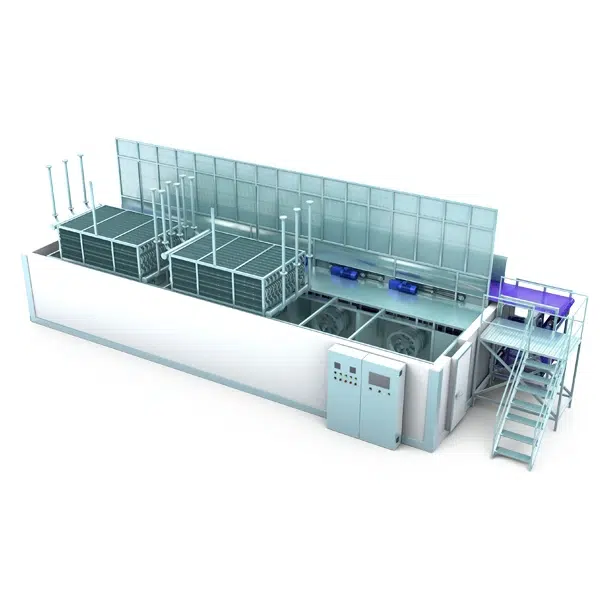
Small individual pieces that can be separated by controlled airflow may suit a fluidized bed IQF freezer. Larger, delicate or irregular products may call for a tunnel or another configuration. The decision should follow product tests and the required process result rather than capacity alone.
What to send for a quotation
A useful inquiry includes the product, capacity, piece size, inlet and outlet temperatures, factory location, utility conditions and existing equipment. Product photos, samples or a short process video can help the engineering team confirm the right basis.
Need help matching the equipment?
Share your product, capacity and target process. Our team can suggest the next technical step.
Send an inquiry