
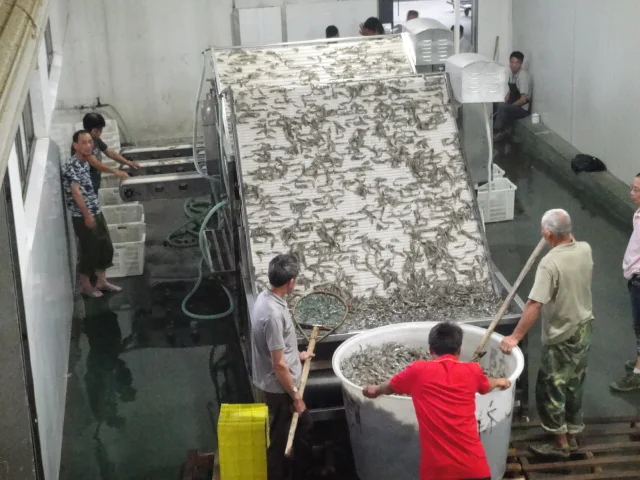
What a shrimp grading machine is designed to do
A shrimp grading machine separates shrimp into size groups so that downstream processing and packing can be handled more consistently. The equipment is normally reviewed as one stage in a seafood processing line rather than as an isolated machine.
The practical result depends on shrimp condition, size range, feed stability, roller arrangement, number of grades and the connection with the next stage. Raw, cooked, peeled and shell-on products may require different process considerations.
How the grading section separates shrimp
Shrimp move through a grading section where the spacing and movement of rollers create separation points. Smaller pieces can pass through earlier openings while larger pieces continue farther along the section. The actual arrangement should be matched to the size range and grade requirements.
Product shape, moisture and feeding direction affect how shrimp move across the rollers. A stable and even feed helps reduce accumulation and supports more consistent separation.
Why size range and grade count matter
Before selecting a machine, define the smallest and largest shrimp sizes and the desired commercial grade categories. A narrow size range may be handled differently from mixed incoming product with a broad distribution. The required number of outlets also affects the layout and collection method.
Provide the product condition and target grade accuracy during the technical review. These details help the engineering team consider roller spacing, outlet positions and the transfer to the next conveyor.
Connecting the grader with the seafood line
A shrimp grader may be supplied after washing, cooking, cooling or selection, depending on the process. After grading, product may continue to an IQF freezer, packing machine or another handling stage. Transfer height, belt width and product direction should be coordinated across the line.
The cooked prawn processing line page illustrates how washing, cooking, cooling, grading, freezing and packing can be arranged as connected stages. A complete layout review can reduce product accumulation between machines.
Feeding stability and operator access
Even distribution at the inlet helps the grading section work under stable conditions. Irregular surges can reduce separation consistency even when the nominal machine capacity appears sufficient. The feeding conveyor and any selection or dewatering stage should therefore be considered together.
Operators also need practical access to the feed area, rollers, guards and discharge outlets. Easy inspection and cleaning access supports daily hygiene and helps maintenance teams identify abnormal movement or product buildup.
Cleaning and maintenance considerations
Shrimp processing equipment is exposed to water, salt and product residue. Product-contact surfaces should be accessible for cleaning, and the layout should provide suitable drainage and inspection space. Always follow the supplier's isolation and sanitation instructions.
Routine checks may include roller condition, fasteners, guards, outlet guides and conveyor alignment. A short empty run can help reveal unusual noise, restricted movement or uneven feeding before normal production begins.
Information needed for equipment selection
- Shrimp species and product condition.
- Minimum and maximum shrimp size.
- Target grade count and outlet arrangement.
- Required hourly throughput.
- Upstream washing, cooking, cooling or selection stages.
- Downstream freezing or packing equipment.
- Available floor space and product flow direction.
Sharing this information allows the shrimp grading machine to be reviewed in the context of the complete process. Visit the shrimp grading machine landing page or use our contact page to start a technical discussion.
Frequently asked questions
Can one grader handle all shrimp sizes?
The suitable size range and grade accuracy should be confirmed before selecting the roller arrangement and outlet configuration.
Where should grading be placed in the line?
Its position depends on product condition and the complete process. Washing, cooking, cooling, selection, freezing and packing should be reviewed together.
What makes a quotation request useful?
Size range, product condition, grade count, capacity, line layout and upstream and downstream equipment information provide a strong basis for review.