
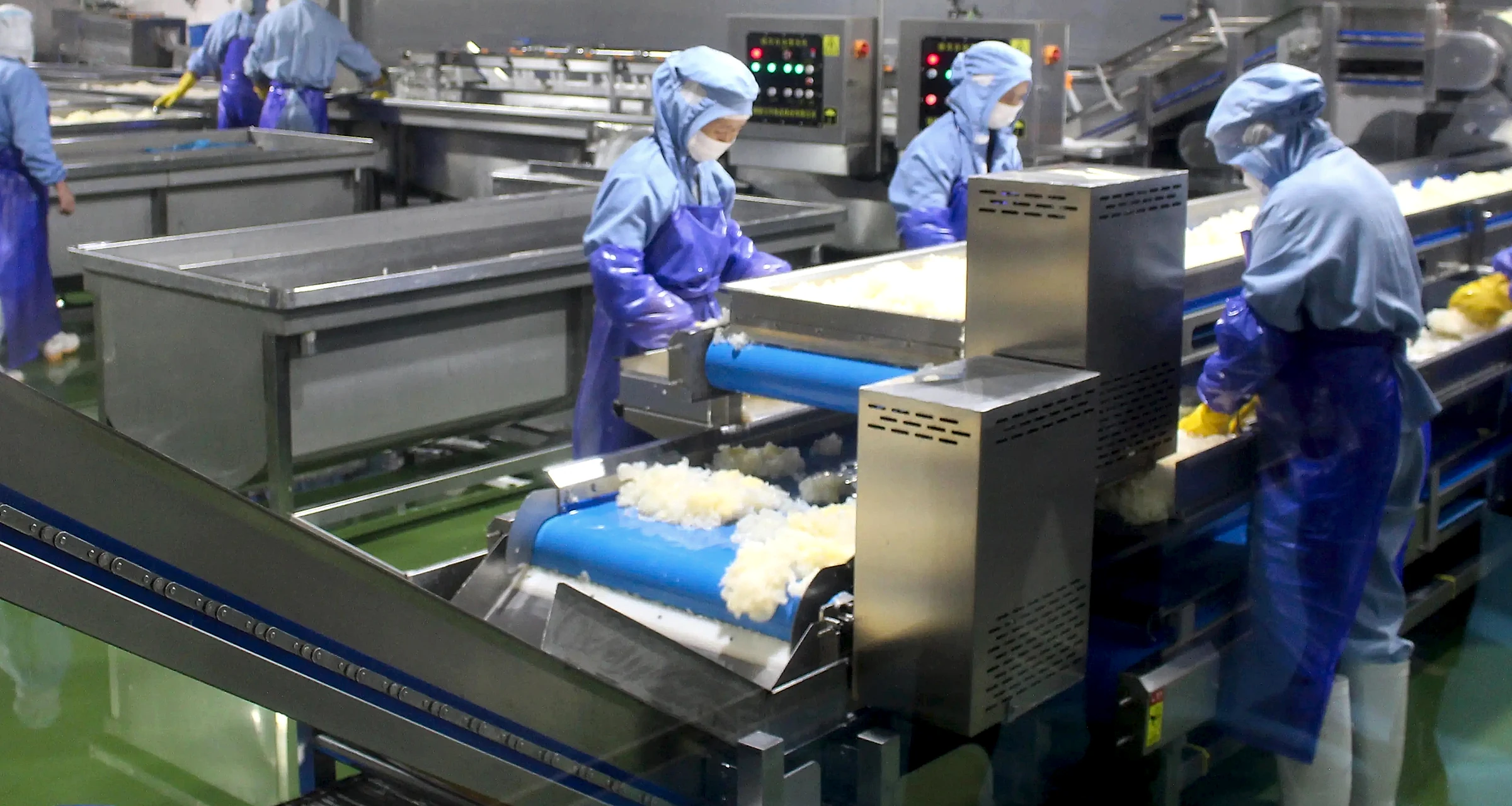
What a fluidized bed IQF freezer does
A fluidized bed IQF freezer is designed to freeze individual pieces of food continuously. It is commonly considered for free-flowing products such as vegetables, berries, diced fruit, dates and suitable seafood products. Instead of freezing the product as one solid mass, the process aims to keep pieces separated while heat is removed.
The final result depends on the product condition and process settings. Product size, surface moisture, inlet temperature, target outlet temperature, loading layer and residence time should be reviewed together before selecting equipment.
How controlled airflow separates the product
Product is spread across a perforated belt while conditioned air moves upward through the product layer. When the airflow and loading conditions are suitable, smaller pieces can move slightly and remain separated as freezing progresses. This action is commonly described as fluidization.
Air velocity is not selected in isolation. Pieces with different sizes, shapes or moisture conditions respond differently to airflow. Stable feeding and an even product layer help the freezing section operate consistently.
Why preparation before freezing matters
Washing, cutting, blanching, cooling and dewatering can all affect freezing performance. Excess surface water may increase sticking, while irregular pieces may require different handling conditions. Product should enter the freezer at a known temperature and with a reasonably consistent distribution.
For a complete line, preparation equipment should supply the freezer continuously. Conveyors, dewatering equipment and pre-cooling stages need to match the intended product flow. See the fluidized bed IQF freezer landing page for the main application scope.
The freezing path and residence time
As the belt carries product through the freezing zone, cold air removes heat from the product surface and interior. The required residence time varies with product thickness, piece size, inlet condition and target outlet temperature. A longer or shorter freezing path should be evaluated from actual process requirements.
The objective is not simply to lower the temperature quickly. The product should leave the freezer in a condition that supports handling, packing and the required final quality. Representative product trials are useful when the process has unusual moisture or shape characteristics.
How capacity is evaluated
Capacity should be stated with the product and operating conditions. A nominal number without product information is not enough for a reliable equipment comparison. Share the product type, piece size, hourly output, inlet temperature, target outlet temperature and expected working schedule.
Plant space, utility conditions, access for cleaning and the direction of product transfer also affect the practical configuration. The vegetable and fruit freezing line page shows how preparation and freezing stages can be considered as one solution.
Cleaning and operating checks
Food-contact surfaces, belts, air passages and drainage areas should be included in the sanitation routine. Operators should follow the equipment supplier's cleaning instructions and confirm that the machine is empty and isolated before maintenance.
During operation, check product distribution, unusual accumulation, airflow condition and outlet temperature. These observations can help identify a feeding or preparation issue before it affects the whole line.
Information for a technical review
- Product type and piece dimensions.
- Raw or prepared product condition.
- Expected surface moisture after dewatering.
- Required hourly capacity.
- Inlet and target outlet temperatures.
- Available layout and utility information.
- Upstream and downstream equipment.
With these details, an engineering team can review the fluidized bed IQF freezer as part of a complete process. Send the requirements through our contact page for a preliminary discussion.
Frequently asked questions
Is fluidization suitable for every food product?
No. The product should be sufficiently free-flowing and compatible with the airflow and belt arrangement. Product trials and process review are recommended for unusual shapes or high surface moisture.
Does airflow alone determine freezing quality?
No. Preparation, loading, product temperature, piece size, residence time and downstream handling all influence the result.
What should be supplied before a quotation?
Product details, target capacity, temperatures, product photos or samples, layout constraints and the upstream and downstream process are useful starting information.