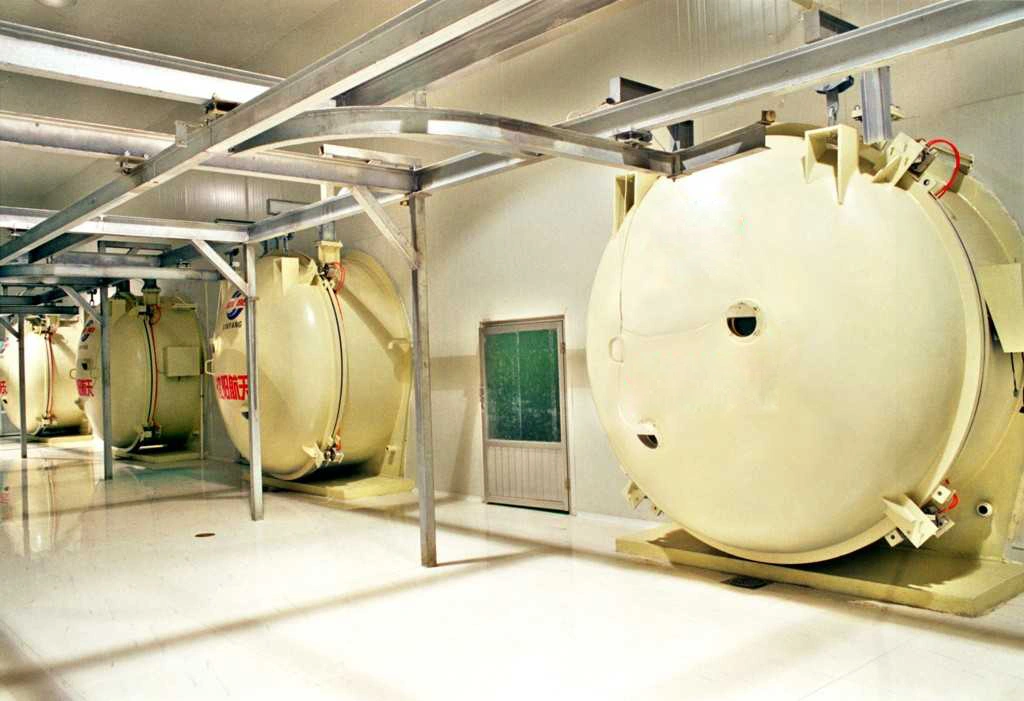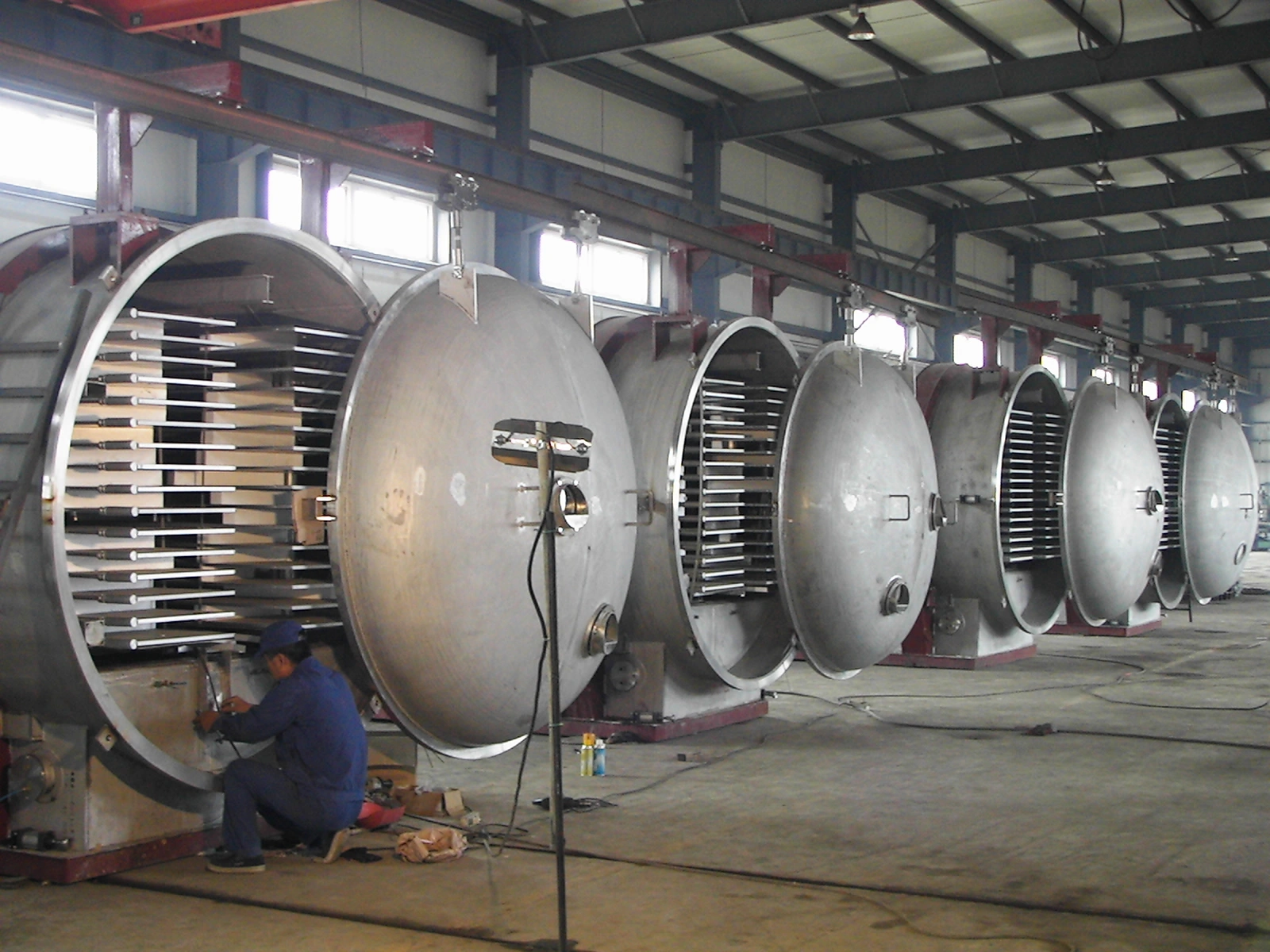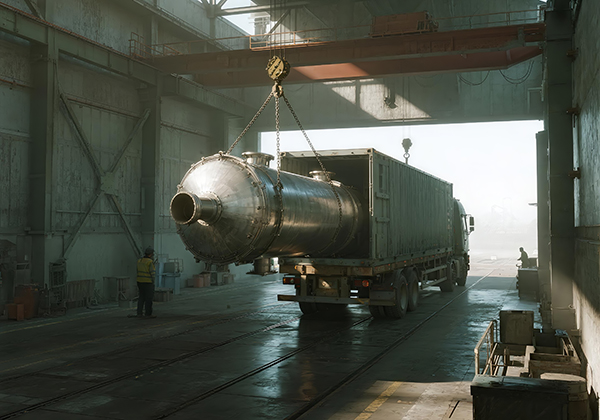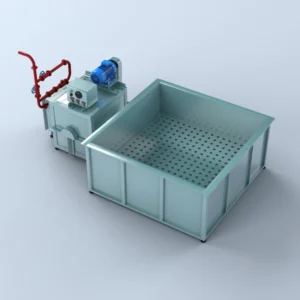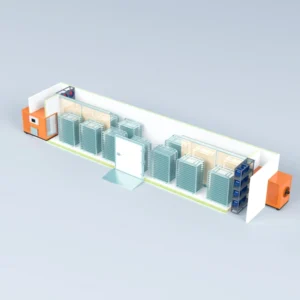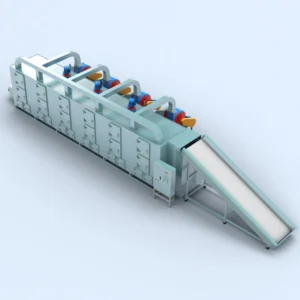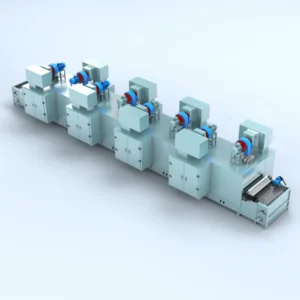
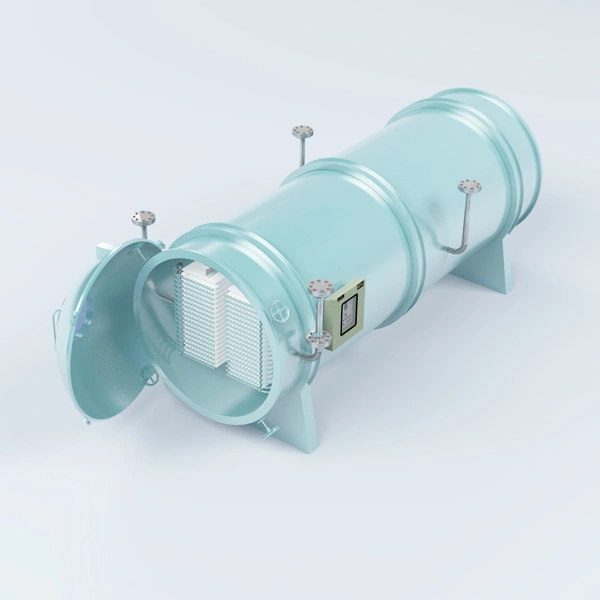
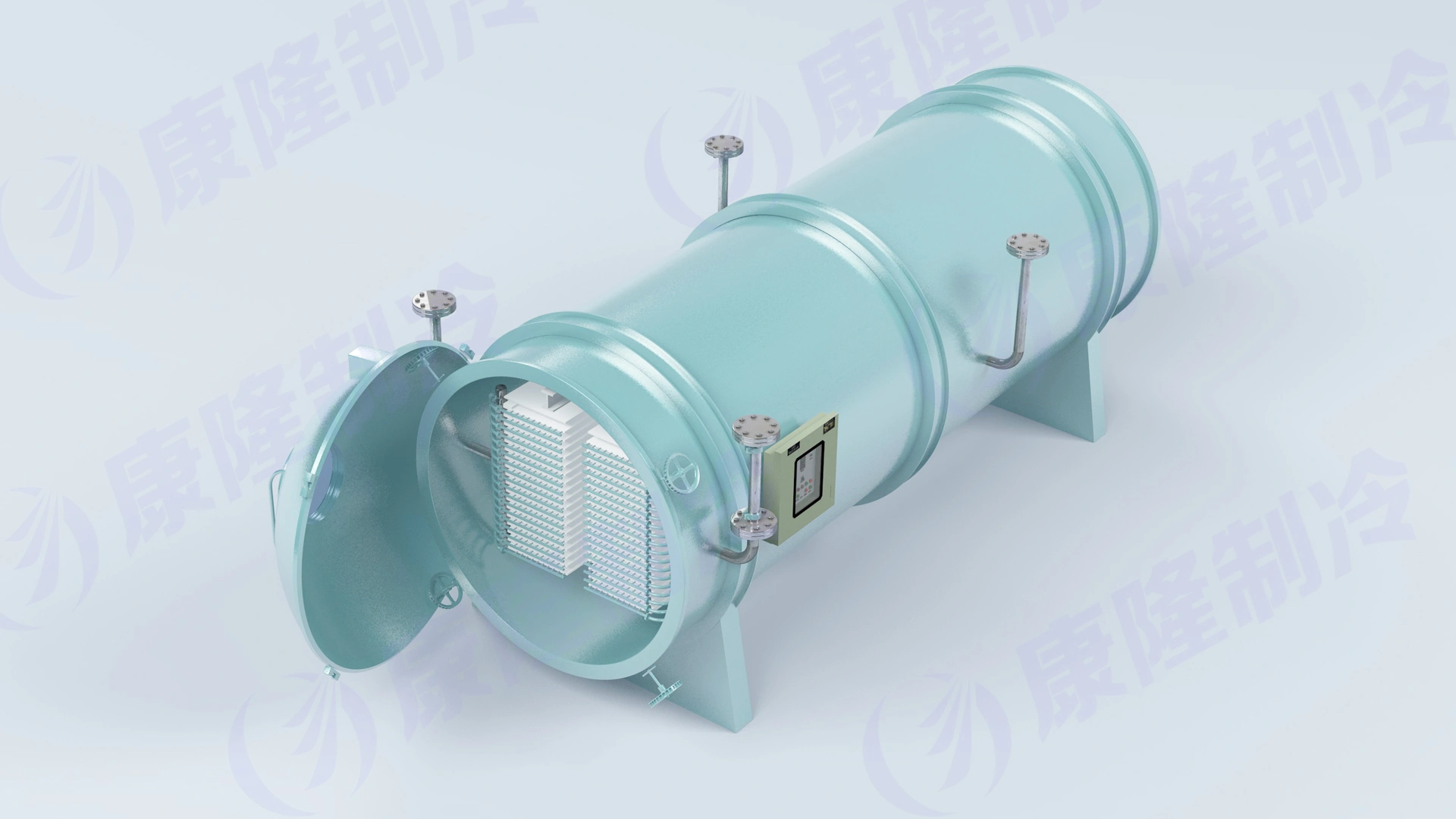
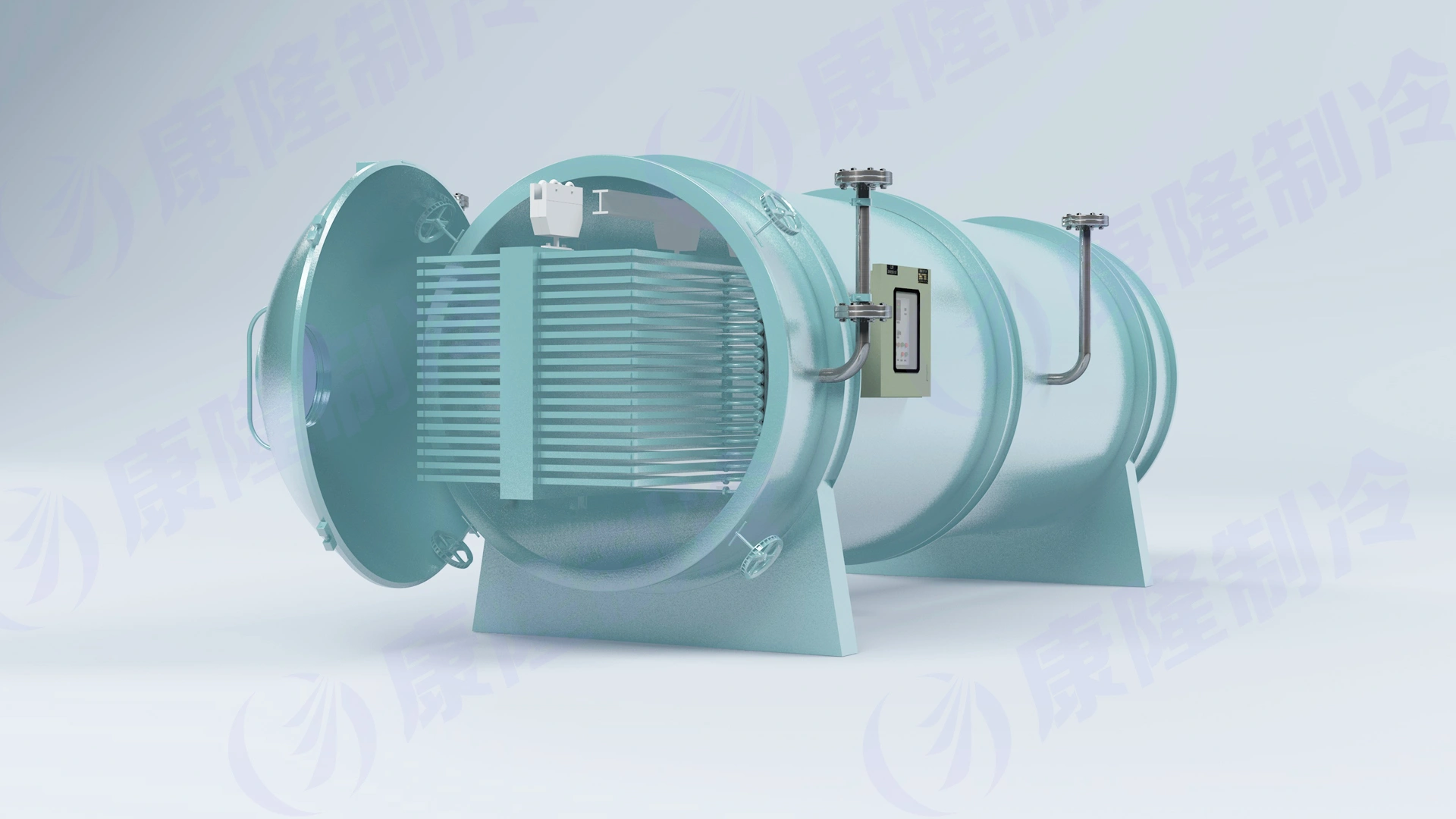
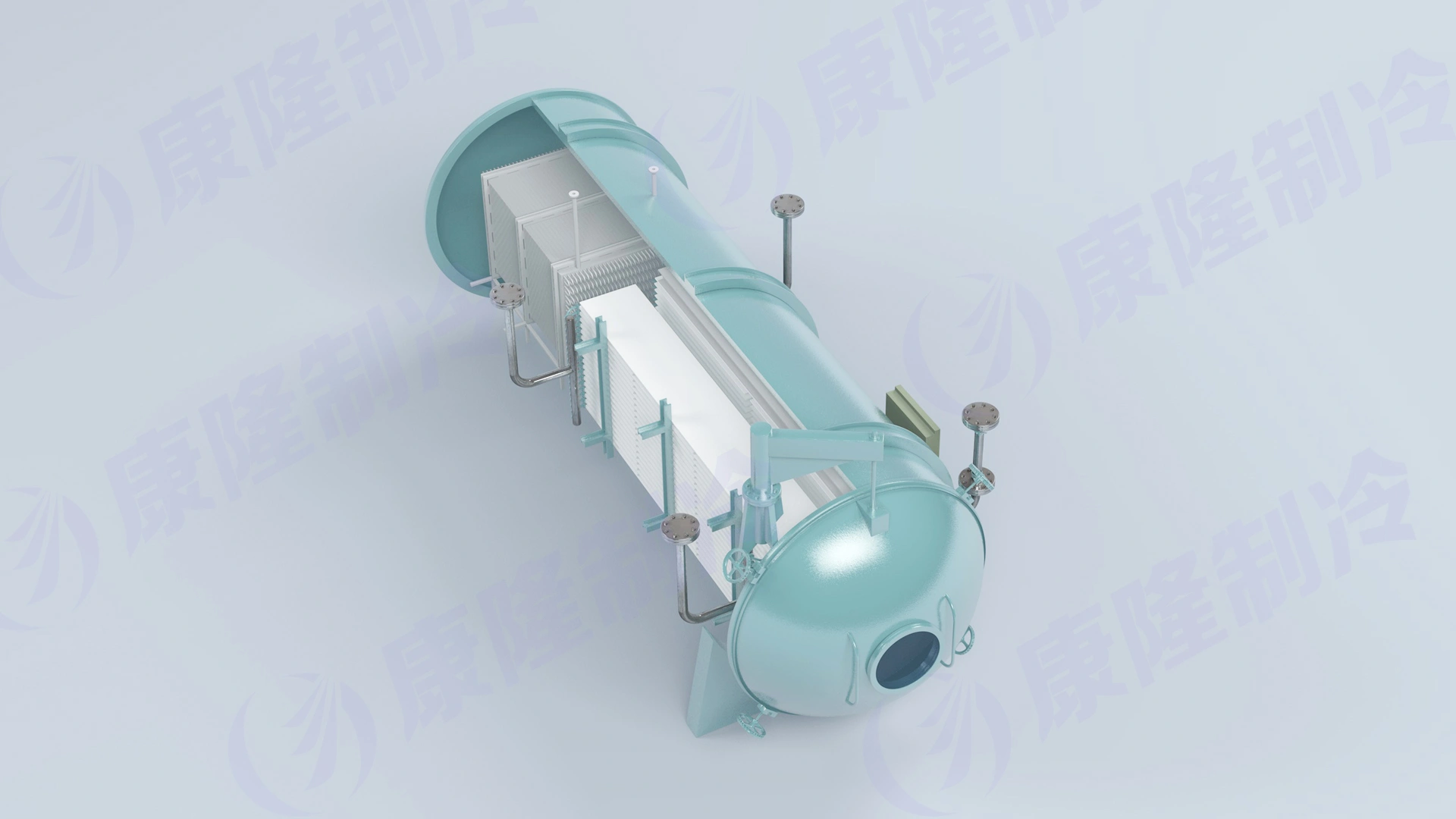
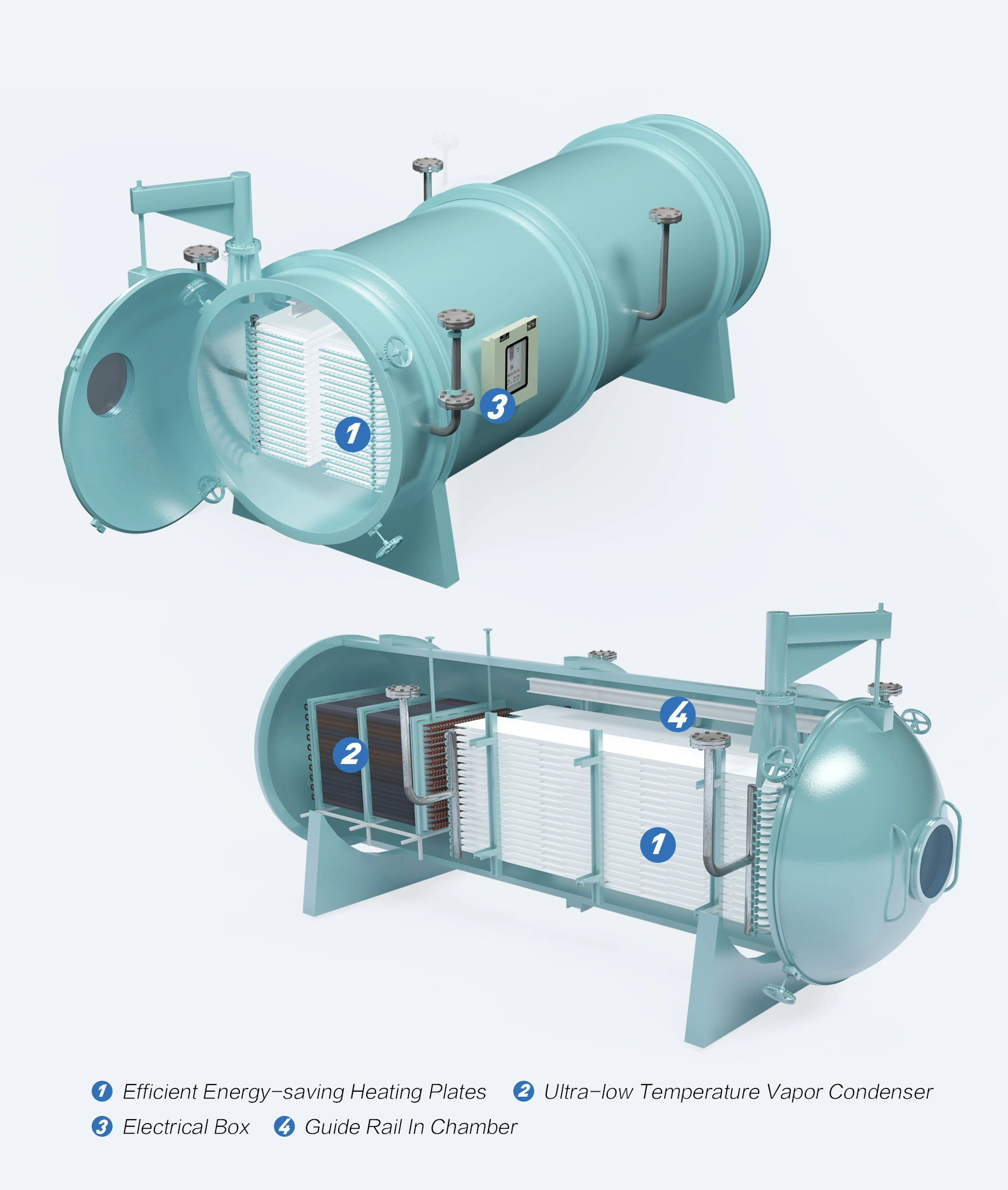
The FD Series vacuum freeze dryer utilizes an advanced dehydration technology that integrates multidisciplinary approaches, including refrigeration, heating, vacuum, biology, and electrical engineering. This technology freezes water-containing materials at low temperatures and then uses thermal radiation to heat them under vacuum conditions, sublimating the ice directly into a gas. After the water is removed, an ice condenser (cold trap) and vacuum dehydration device are used to remove any remaining moisture.
| KFD-5 | KFD-10 | KFD-25 | KFD-50 | KFD-100 | KFD-150 | KFD-200 | |
|---|---|---|---|---|---|---|---|
| Drying Area(m²) | 5 | 10 | 25 | 50 | 100 | 150 | 200 |
| Equipment Floor Area (m2) | 12 | 24 | 50 | 86 | 130 | 190 | 260 |
| Advise Minimum Usable Area (m2) | 22 | 45 | 80 | 180 | 255 | 330 | 450 |
| Size Of Material Tray(mm) | 780×540×30 | 540×645×30 | 540×645×30 | 540×645×30 | 540×645×30 | 540×645×30 | 540×645×30 |
| Number Of Material Tray(pcs) | 12 | 24 | 72 | 144 | 288 | 438 | 576 |
| Size Of Tank(m) | Ф1.0×3.4 | Ф1.5×3.2 | Ф1.88×4.2 | Ф2.0×8.16 | Ф2.4×10.2 | Ф2.4×13.9 | Ф2.4×17.8 |
| Operation Vacuum(Pa) | 13.3-133 Pa | 13.3-133 Pa | 13.3-133 Pa | 13.3-133 Pa | 13.3-133 Pa | 13.3-133 Pa | 13.3-133 Pa |
| Heating Plate Temp.(℃) | Normal temperature~+120℃ | Normal temperature~+120℃ | Normal temperature~+120℃ | Normal temperature~+120℃ | Normal temperature~+120℃ | Normal temperature~+120℃ | Normal temperature~+120℃ |
| Electric Heating(Kw) | 12 | 21 | 50 | / | / | / | / |
| Steam Consumption(kg/h0.7mPa) | / | / | / | 150 | 300 | 450 | 560 |
| Cold Load Consumption(kw) | 12 | 22 | 45 | 90 | 180 | 270 | 360 |
| Installation Power(Kw) | 22 | 53 | 112 | 213 | 289 | 370 |
Technical description:
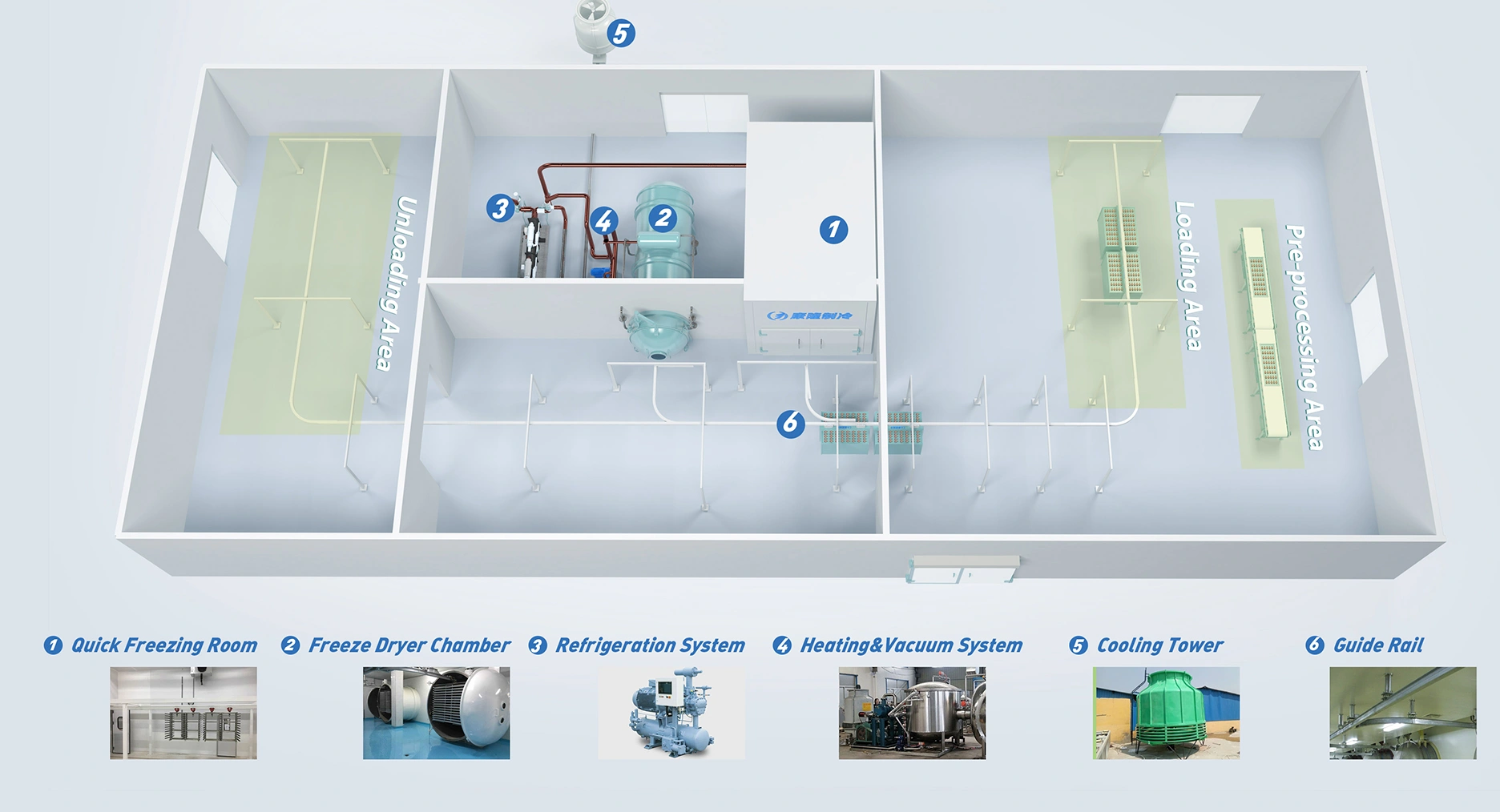
1. The KFD series freeze dryer has the option of rear-mounted, side-mounted, or top-mounted cold trap positions.
2. Different defrosting methods are available, including one-time water defrosting, steam defrosting, and automatic alternated defrosting.
3. The size of the freeze dryer varies according to capacity, including mini lab, medium production, and large-scale production types. Custom sizes are also available.
4. The KFD series freeze dryer uses two heating methods: electric heating for mini and medium-size models, and steam heating for large-scale models.
5. The refrigeration system of the FD series freeze dryer uses either Freon or Ammonia. The table specifies the parameters for Freon refrigeration systems.
6. It is recommended to have a minimum usable area that includes equipment floor area, equipment maintenance space, and processing materials flow area. Multiple sets of equipment can save space and be designed according to specific needs.
The KFD series vacuum freeze dryer consists of multiple subsystems, including a material quick-freezing system, a vacuum tank system, a heating system, a vacuum system, a refrigeration system, a material conveying system, an electronic control system, a pneumatic system, and a disinfection system. The overall system features an optimized design that is rational, economical, and advanced, offering high efficiency, automation, energy saving, simple operation, and easy maintenance.
The vacuum system utilizes a combination of a water ring pump or an oil-sealed pump with a multi-stage Roots pump, rapidly removing air and maintaining a vacuum state while requiring minimal power, thus reducing energy consumption. The water ring pump effectively removes moisture from the material, overcoming the drawbacks of oil-sealed pumps, such as poor drainage, oil emulsification, and unstable vacuum.
The heating system utilizes a sealed water circulation system with automatic compression and is equipped with a three-way regulating valve to regulate the water circulation system’s heat. The automatic compression system maintains hot water temperatures up to +120°C, improving thermal efficiency.
The refrigeration system utilizes Freon (CFC) for small and medium-sized models, while ammonia single-phase circulation is used for large models. The expansion valve automatically adjusts liquid flow, and the ice condenser utilizes a post-mounted cold trap. This ensures short piping, low resistance, and smooth air and water flow, resulting in efficient, energy-efficient, and uniform water collection.
The electrical control system utilizes intelligent instrumentation, a PLC control system, touch screen controls, and computer monitoring. This system utilizes a ten-period freeze-drying curve automatic control system specifically designed for food freeze-drying processes. The system’s curve parameters are easily set, offering high reliability and accuracy. Historical data storage and query capabilities facilitate production process analysis.
Vacuum freeze-drying is an advanced dehydration technology that first freezes water-containing materials at low temperatures and then uses thermal radiation under vacuum conditions to sublimate the ice directly into gas. After the water is removed, the remaining water is removed using an ice condenser (cold trap) and vacuum equipment. This multidisciplinary, integrated technology encompasses refrigeration, heating, vacuum, biology, and electrical engineering.
Vacuum freeze-drying technology has a wide range of applications, including chemical products, biological preparations, health supplements, herbal remedies, and agricultural products such as meat, poultry, eggs, seafood, vegetables, and fruit.
The vacuum freeze drying process can be broken down into three main stages.
1. The first stage is the quick freezing of the material. During this stage, the water content in the products turns into a solid state from a liquid state by freezing. The final frozen temperature should be below the eutectic point temperature, which is determined by testing the material to ensure that it is fully frozen. The freezing speed of the material depends on its characteristics, and a quick blast freezing room is used for pre-freezing.
2. The second stage is the primary dehydration stage, also known as the sublimation dehydration stage. The frozen material with a temperature below the eutectic point is dehydrated in a vacuum condition by sublimation to remove its moisture.
During sublimation, the heating plate temperature and vacuum condition must be strictly controlled to prevent the material from melting or the temperature from rising above the eutectic point.
The temperature of the dried parts must also be prevented from rising above their disintegration temperature, which can cause a change in shape or even collapse. During this stage, the heating plates heat the material by thermal radiation or provide the energy for sublimation. The vacuum tank must be under vacuum condition, and the ice-condenser (cold trap) catches the moisture that comes from the material and condenses it to ice on the surface of the cold trap coils.
3. The third stage is the secondary dehydration stage, also known as desorption drying. The purpose of this stage is to remove bound moisture. Because the adsorption energy of bound moisture is very high, a large amount of heat energy must be provided in this stage. This means that the heating plate temperature will be slightly higher to approach the highest temperature that the material can bear. When the material moisture is within the specified range, the final dehydration is complete.
4. To determine whether the vacuum freeze drying process is complete, it can be based on experience of the material temperature curve, sample status, shape, and other factors. The process can also be evaluated using terminal point testing, such as air pressure increases.